Why Small Teams Struggle With Task Management (And How to Fix It)
The Small Team Task Management Problem
Small teams — typically 2 to 15 people — face a unique task management challenge. They are too big for informal coordination...

Posts by:
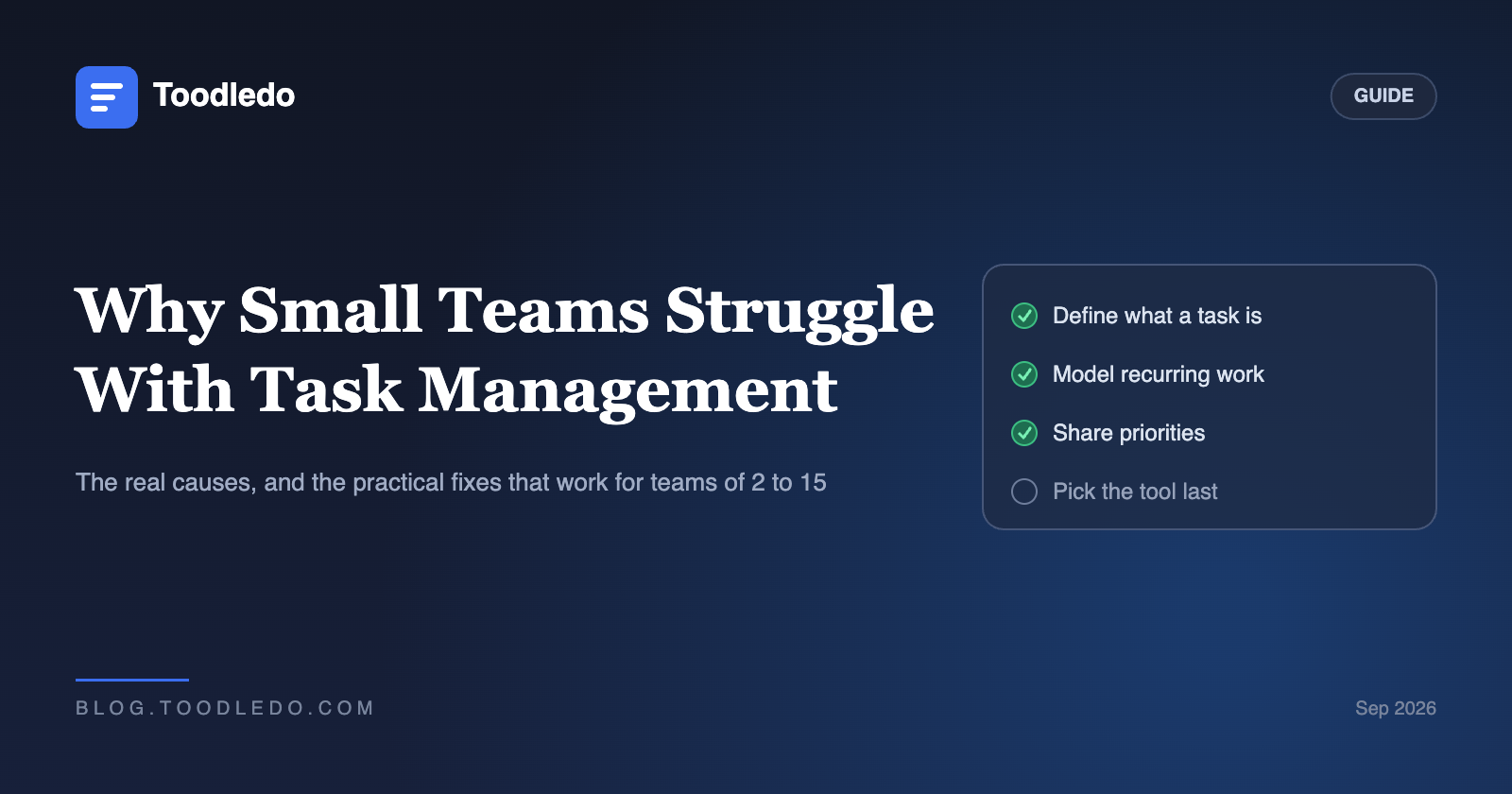
Small teams — typically 2 to 15 people — face a unique task management challenge. They are too big for informal coordination...
As teams scale past a handful of members, simple task lists become unmanageable. The difference between a team that...

David Allen's Getting Things Done methodology starts with a deceptively simple instruction: capture everything. Every task, idea, commitment, "I should really..." thought, half-formed plan, and nagging worry — get it out of your head and into a trusted system.
Today is September 15. Your extended partnership and S-corp returns are out the door, or they aren't, and either way the room is quiet in the particular way it gets when everyone is tired and nobody wants to say so.
If you have ADHD — or even if you don't — your environment is either helping you focus or actively sabotaging you. Most people never audit their workspace for distraction triggers, so they fight the same battles every day without realizing the battlefield itself is the problem.
Every time you switch from one type of task to another — from writing a report to answering emails to reviewing a spreadsheet — your brain pays a tax. Psychologists call it "switching cost," and research suggests it can eat up 40% of your productive time.
The Pomodoro Technique is one of the simplest productivity methods ever invented: work for 25 minutes, break for 5, repeat. After four rounds, take a longer break. That's it.
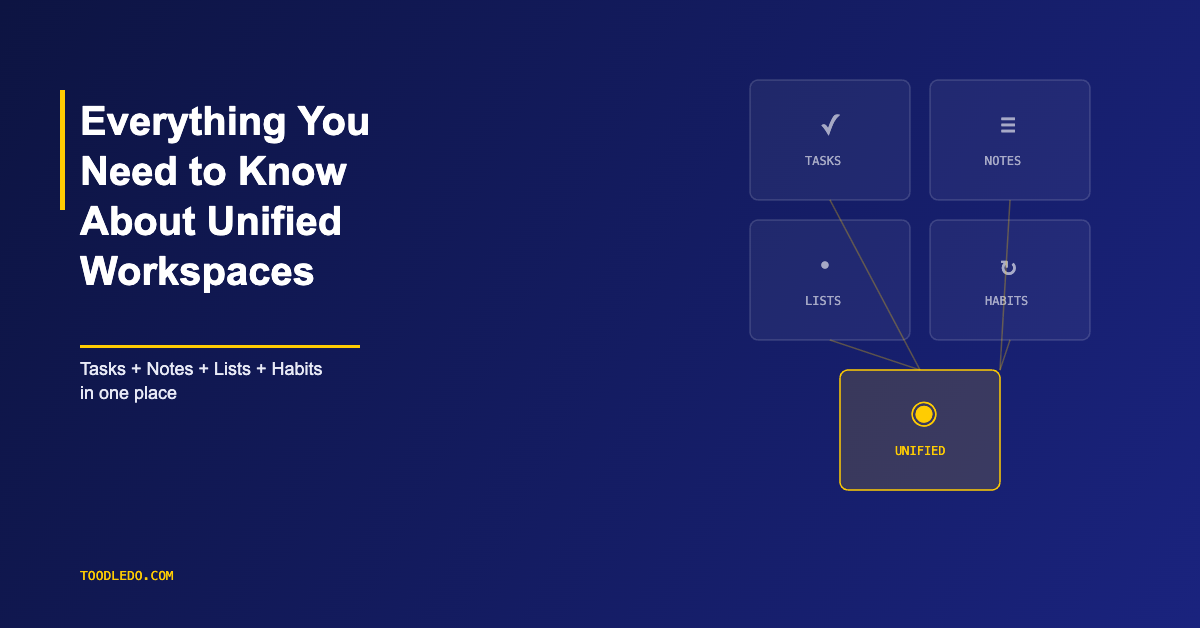
A unified workspace combines task management, notes, lists, and organizational tools in a single application. Instead of using one app for tasks, another for notes, a third for lists, and a fourth for habits, a unified workspace puts everything in one place.
Basic task tools work when you're solo. Add two or three people and the cracks appear within weeks. Tasks fall through gaps, nobody knows who's doing what, and the team starts building workarounds — spreadsheets, Slack threads, shared docs — that defeat the purpose of having a task tool at all.
Freelancers evaluating to-do list apps face a specific problem: most comparison articles are written for teams. They focus on collaboration features, admin controls, and per-seat pricing. None of that matters when you're a team of one managing six clients.